ATM Fees in Rio de Janeiro: A Guide for Tourists
Last updated: April 2026
TL;DR (Quick Answer)
- Most tourists pay R$18–R$30 per withdrawal in combined fees — home bank charge plus conversion markup — and that number jumps if you accept the ATM’s currency conversion offer.
- Banco 24 Horas street kiosks charge around R$18–R$24 per foreign card withdrawal; branch ATMs at Bradesco, Itaú, and Santander generally add no local fee on top.
- Always decline dynamic currency conversion — accepting it adds a 5–8% hidden markup and can cost you R$25–R$40 on a single withdrawal for nothing.
- Revolut Standard gives UK/EU users ~£200/€200 free per month; Wise gives European cardholders €250 free from May 2026; Charles Schwab reimburses every ATM fee worldwide with no cap.
- Withdraw R$400–R$600 at a time from a branch ATM in daylight — small withdrawals with a per-transaction fee are just throwing money away.
If you are searching for ATM fees in Rio de Janeiro, you have the same question every tourist has on day one: where do I get cash without getting ripped off. Fair question. The answer depends on three things — which card you use, which machine you pick, and whether you press the right button when the conversion screen appears. Get those three right and Rio is cheap. Get them wrong and you are paying 15% more than you should on every withdrawal.
Most tourists get this wrong on day one. They land at Galeão, grab the nearest Banco 24 Horas kiosk, accept whatever currency conversion screen pops up, and pull R$200 at the worst possible hour. Then they wonder why the fees look ugly and the whole thing feels sketchy.
Browse verified profiles at Escorts Rio de Janeiro, read the step-by-step process at how to book an escort in Rio, and check Rio escort tips and etiquette before you make first contact. Bad timing ruins good plans. Good planning makes the price irrelevant.
Before your flight, open Google Maps, find a Bradesco or Banco do Brasil branch within walking distance of your hotel, confirm it still exists using street view, and plan your first stop there. The extra five minutes before you fly removes an entire category of arrival-day stress. While you are sorting logistics, how to book an escort in Rio covers the rest of the pre-arrival checklist that most tourists skip.
How ATM Fees Work in Rio
There are three costs stacked on every withdrawal: your home bank’s foreign ATM fee (typically $3–$5 USD flat per transaction), your bank’s currency conversion markup (usually 1–3% of the amount), and the local ATM operator fee if the machine charges one. Sometimes you pay only one. Sometimes you pay all three. That is why two tourists standing at the same machine get different totals on their statement.
Brazilian bank ATMs do not always show a big separate local fee the way machines in Europe or the US do — but that does not mean the withdrawal is free. The real damage is your home bank’s flat charge plus a bad exchange rate if you accept dynamic currency conversion on screen. Never let the machine convert to your home currency. Pick BRL every time and let your card handle the conversion at a real rate.
Compared with exchange desks, ATMs still give you a better rate — as long as your card is decent and you pick the right machine. Exchange kiosks in Copacabana and Ipanema are convenient, but the spread is consistently worse than a branch ATM with a travel-friendly card. Rio is card-friendly enough that you do not need to carry a week’s budget in cash. Use the card for restaurants, Uber, and hotels. Keep cash for beach vendors, tips, and the odd kiosk that does not take plastic.
What changed in 2026
No major law rewrote the ATM landscape in 2026, but Brazilian banks and ATM networks tightened fraud monitoring for foreign cards significantly. The practical effect: more cards trigger verification blocks on late-night withdrawals, machines are more likely to reject multiple quick attempts in a row, and some networks now flag foreign cards that have not been pre-notified by their home bank. Update your banking app before you fly, enable international transactions explicitly, and make sure your bank’s push notification system works on your roaming SIM or eSIM — without it, security approvals fail silently and the ATM just returns your card.
ATM Fees in Rio de Janeiro – Where to Withdraw Cash Safely
Use ATMs inside bank branches, shopping malls, airport terminals, or the lobby of a larger supermarket or business center. Skip isolated street machines — especially Banco 24 Horas kiosks on quiet corners, which carry a worse record for skimming and distraction theft than branch machines. If the ATM feels wrong or the card slot looks like it has something attached to it, leave. Rio has enough legitimate machines that you never need to force one.
Daytime wins. Late afternoon is still fine. Midnight is a no-go.
Shield the keypad, put the cash away before you step outside, and do not count bills on the sidewalk. If you are moving somewhere after withdrawing, plan the route before you leave the branch. Read our guide on safe transportation for foreigners in Rio de Janeiro — cash safety and transport safety are the same conversation in this city. The same careful approach applies to everything else you are planning: Rio escort tips and etiquette covers the behavior patterns that keep trips smooth beyond the ATM.
Best night rule
If you need cash after dark, use an ATM inside a shopping mall — Shopping Rio Sul in Botafogo, Shopping Leblon, or BarraShopping are all open late and have staffed, well-lit bank vestibules. A machine facing the street at night is a different risk category. Sort your cash before dinner. Smooth nights start with boring preparation.
Using Foreign Debit Cards in Brazil
Before your flight, confirm four things with your bank: Brazil is enabled for international use, your daily withdrawal limit covers what you need (many default limits are set surprisingly low), your card runs on Visa, Mastercard, Cirrus, or Maestro international networks, and your banking app can approve security checks on your travel SIM. Do this at home. Airport Wi-Fi is not where smart planning starts.
Foreign debit cards work at most major bank ATMs in Rio, but not every machine accepts every card. That is normal. If a Bradesco machine rejects your card, try Banco do Brasil or Santander nearby rather than forcing multiple attempts at the same terminal — repeated declines can temporarily lock your card at the network level.
You do not need to walk around with a weekend budget in your pocket. That is rookie behavior.
The dynamic currency conversion trap
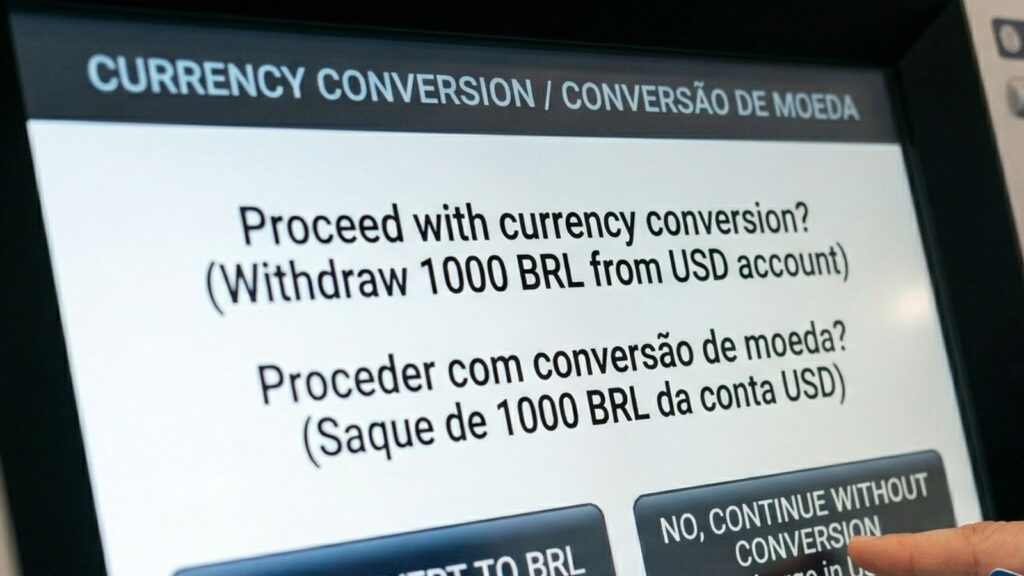
When the ATM asks if you want the amount converted into dollars, euros, or your home currency, decline it. Always. The machine’s conversion rate adds a 5–8% markup on top of whatever your bank charges — on a R$500 withdrawal, that is R$25–R$40 gone for nothing. The option is labeled differently on different machines: “charge in your home currency,” “use guaranteed rate,” or sometimes your currency is just shown first as the default. Whatever the wording — pick BRL and confirm.
Best ATM Areas in Rio for Foreign Tourists
The easiest and safest zones for cash withdrawals are Copacabana, Ipanema, Leblon, Botafogo, Flamengo, and Barra da Tijuca. These neighborhoods have dense branch coverage, heavy foot traffic, security cameras, and ATMs that are used to seeing foreign cards. If you are staying in Copacabana, Avenida Nossa Senhora de Copacabana and Avenida Atlântica both have multiple Bradesco and Itaú branches within a short walk. Ipanema’s main strip along Rua Visconde de Pirajá is the same story.
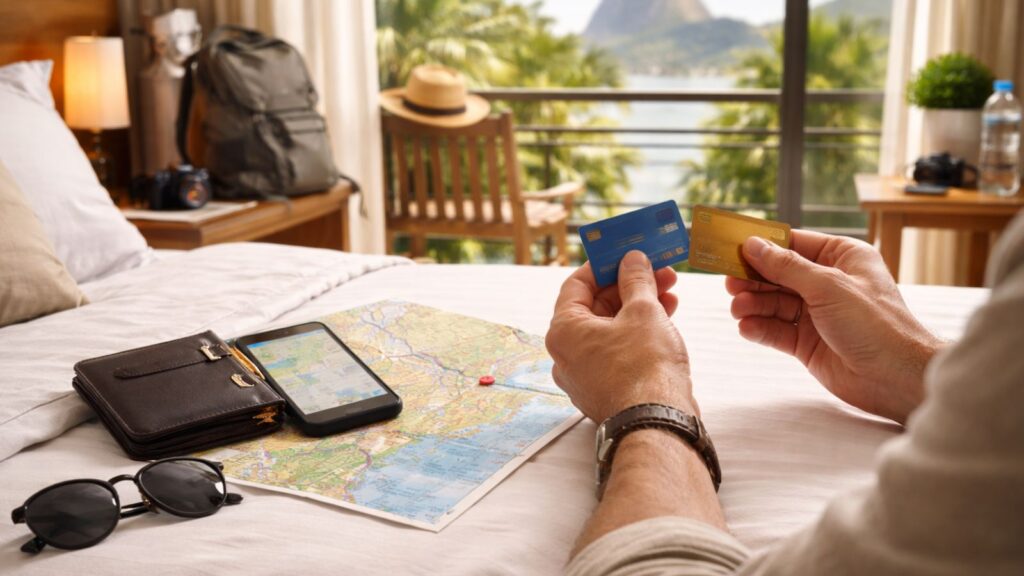
Pick the hotel first. Everything gets easier after that.
Bank branches typically operate 10am–4pm on weekdays. Vestibule ATMs and mall machines run later, but a staffed branch is the right choice for a first withdrawal — if your card gets retained, someone is actually there to help. Google Maps will show you nearby ATMs, but cross-check with street view and confirm the branch is still active before you walk fifteen minutes to a machine that closed two years ago.
Which banks work best for foreign cards
Bradesco is the most consistently cited option by international travelers — branch ATMs accept a wide range of foreign cards, single withdrawal limits reach R$2,500, and the machines are widespread in good locations. Banco do Brasil, Itaú, and Santander are solid backup options. Avoid Itaú machines if your card does not carry Visa or Mastercard international branding — some Itaú terminals do not accept cards outside their network. Branch setting beats bank name every time, but if you are choosing between equal locations, Bradesco first.
ATM Fees in Rio de Janeiro – Fees and Safety at a Glance
| Option | Typical fee for foreign cards | Safety level | Best for | Watch out for |
|---|---|---|---|---|
| Bradesco branch ATM | Home bank fee only (~$3–$5 USD flat); no local surcharge | High | First withdrawal; higher limits up to R$2,500 | Branch hours end at 4pm even if vestibule machine stays open |
| Banco do Brasil / Itaú / Santander branch | Home bank fee only; no local surcharge at branch machines | High | Backup if Bradesco is full or unavailable | Itaú terminals may reject non-Visa/Mastercard international cards |
| ATM inside shopping mall (Rio Sul, Leblon, BarraShopping) | Varies by machine; branch ATMs inside malls same as above | High | Evening withdrawals after branch hours | Standalone non-bank kiosks inside malls may still add a surcharge |
| Airport ATM (Galeão / Santos Dumont) | Home bank fee; some machines add ~R$18–R$24 operator fee | Medium to high | Small arrival buffer of R$100–R$200 only | Do not pull your full trip budget at the airport |
| Banco 24 Horas street kiosk | ~R$18–R$24 operator fee on top of home bank charge | Low to medium | Balance checks only; cash emergency if nothing else exists | Higher skimming risk; worst value for foreign cards |
| Currency exchange desk (cambio) | No ATM fee, but spread is typically 5–10% worse than a card withdrawal | Medium | Last resort if cards fail entirely | Airport and hotel desks have the worst rates; street cambios slightly better |
| Paying by card directly | Foreign transaction fee depends on card (0–3%); no ATM fee | High | Restaurants, hotels, Uber, shops in Zona Sul | Beach vendors, smaller kiosks, and tips almost always require cash |
The table makes the answer obvious: the cheapest combination in Rio is a travel card (Revolut, Wise, or Schwab) used at a Bradesco or Banco do Brasil branch ATM, with everything else paid by card directly. The worst combination is a traditional home bank debit card used at a Banco 24 Horas kiosk with DCC accepted — you could easily pay 15–20% above the real exchange rate on that single transaction.
Cards That Cut ATM Fees in Rio Almost to Zero
Your home bank is the problem, not the Brazilian ATM. Most traditional banks charge a flat $3–$5 USD per foreign withdrawal plus a 1–3% currency conversion markup. On a week in Rio with four or five withdrawals, that is $20–$40 in fees before the Brazilian machine has added anything. The fix is simple: bring a second card built for international use and treat your regular debit card as an emergency backup.
Revolut
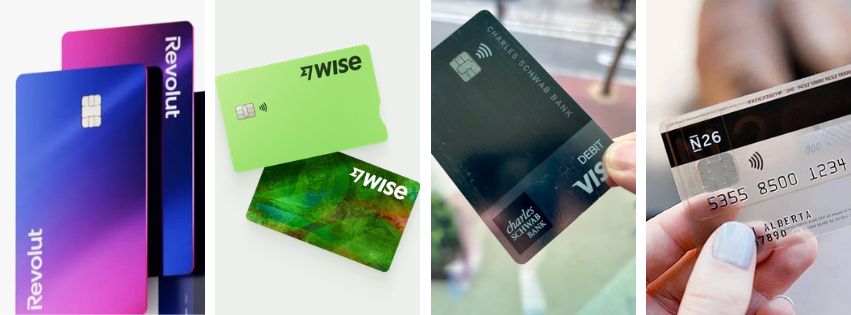
Revolut is the most common travel card among tourists in Rio right now. On the Standard free plan, UK and EU users get approximately £200/€200 per month in ATM withdrawals with no Revolut fee — above that limit, a 2% fair usage fee applies. Paid plans (Plus, Premium, Metal) push the free limit higher. The Revolut app has a built-in ATM locator that flags surcharge-free machines near your current location, which saves real time in a city where machine quality varies by block.
One Brazil-specific catch: Revolut does not cover fees charged by the ATM operator on their end. Those appear as a separate line on screen before you confirm. If the machine shows a local fee, cancel and walk to the nearest Bradesco or Banco do Brasil branch instead. Also worth knowing: weekend currency conversion with Revolut adds a small markup of roughly 0.5–1% depending on your plan. Convert or load BRL on a weekday if you can.
Wise
Wise uses the mid-market exchange rate with no markup — the cleanest rate you can get as a tourist without a local Brazilian bank account. From May 2026, Wise updated its ATM policy for European cardholders: up to €250 free per calendar month, replacing the old two-withdrawal limit and removing the €0.50 fixed fee per transaction. US-issued Wise cards have different allowances — check your app before traveling.
One practical note for Brazil: Wise cards work most reliably at Banco 24 Horas network ATMs when the machine prompts you to choose between domestic and international cards — always pick international. Some Bradesco branch ATMs also accept Wise without issue. Test one small withdrawal on arrival before you commit to pulling R$600 in one go.
Charles Schwab (US travelers only)
For Americans, the Charles Schwab Investor Checking account is the cleanest solution that exists for international travel. Schwab reimburses all ATM fees worldwide at the end of each month — including the R$18–R$24 operator fee that Brazilian street machines charge and that Revolut and Wise do not cover. There is no foreign transaction fee, no monthly account fee, and no cap on reimbursements. You need a US address to open one, but if you already have it, bring it to Rio and do not leave home without it.
Card comparison at a glance
| Card | Monthly free ATM limit | Fee above limit | Exchange rate | Covers Brazilian operator fee? | Best for |
|---|---|---|---|---|---|
| Revolut Standard | ~£200/€200 (region-dependent) | 2% of amount withdrawn | Mid-market weekdays; ~0.5–1% markup weekends | No | EU/UK travelers; free card with app ATM locator |
| Wise | ~€250 for EU cards from May 2026 | Variable % above limit | Mid-market, no markup | No | Anyone who wants the cleanest exchange rate |
| Charles Schwab (US) | Unlimited — full monthly reimbursement | None | Visa rate (competitive) | Yes — reimbursed at month end | US travelers — best all-around option |
| N26 | 2 free withdrawals/month in EUR | ~1.7% + €0.50 per withdrawal | Mastercard rate | No | EU residents as a backup card only |
None of these cards can fully eliminate every fee if the Brazilian ATM operator adds their own charge — that is the one cost outside your card’s control, which is why machine location still matters even when your card is excellent. The cheapest combination in Rio: a Revolut or Wise card used at a Bradesco branch ATM. That gets you close to zero fees on the card side with no local surcharge on the machine side.
How to Avoid ATM Fees in Rio de Janeiro: 5 Practical Tips
These are not generic travel tips. This is what experienced visitors to Rio actually do to keep cash costs low.
1. Bring a fee-free travel card — not your home bank debit card
Your regular bank card is almost certainly charging a flat withdrawal fee plus a conversion markup on every transaction. Switch that to Revolut, Wise, or Schwab before you fly and you eliminate the biggest cost immediately. Both Revolut and Wise take minutes to set up digitally, but the physical card takes up to a week to arrive — order it before your trip, or use the virtual card for contactless payments on arrival while the physical one ships.
If you are American, get Charles Schwab. It is the only card that also covers what the Brazilian machine charges on their end.
2. Withdraw larger amounts, less often
Per-transaction fees are flat — they do not care whether you pull R$100 or R$600. A R$100 withdrawal with a R$20 machine fee is a 20% loss before you have even spent anything. Bradesco branch ATMs allow up to R$2,500 per transaction for foreign cards, which is generous. Figure out what you need for two or three days, pull it once from a branch ATM, and stop going back every day.
Most daily spending in Copacabana and Ipanema can go on card anyway — restaurants, rides, bars, most shops. Cash is for tips, beach vendors, kiosks, and smaller places that prefer it. R$400–R$600 every few days covers most tourists comfortably.
3. Decline dynamic currency conversion every single time
This catches tourists every time. When the ATM screen asks if you want to be charged in dollars, euros, or your home currency instead of reais — the answer is always no. The machine’s rate adds a 5–8% markup on top of everything else your bank is already charging. On a R$500 withdrawal, that is R$25–R$40 gone for nothing.
The option appears under different labels on different machines: “charge in your home currency,” “use guaranteed rate,” or sometimes your home currency is shown first as the default. Whatever the wording, pick BRL and confirm.
4. Avoid Banco 24 Horas street kiosks for actual withdrawals
Banco 24 Horas machines are everywhere — inside pharmacies, convenience stores, and on busy corners in Copacabana and Ipanema. They are fine for checking your balance. They are not the right choice for cash withdrawals. These kiosks typically charge around R$18–R$24 per transaction for foreign cards, and they carry a worse skimming track record than branch ATMs. That fee hits before your home bank’s charge and before any conversion markup — you can easily be paying three layers of fees at once at one of these machines.
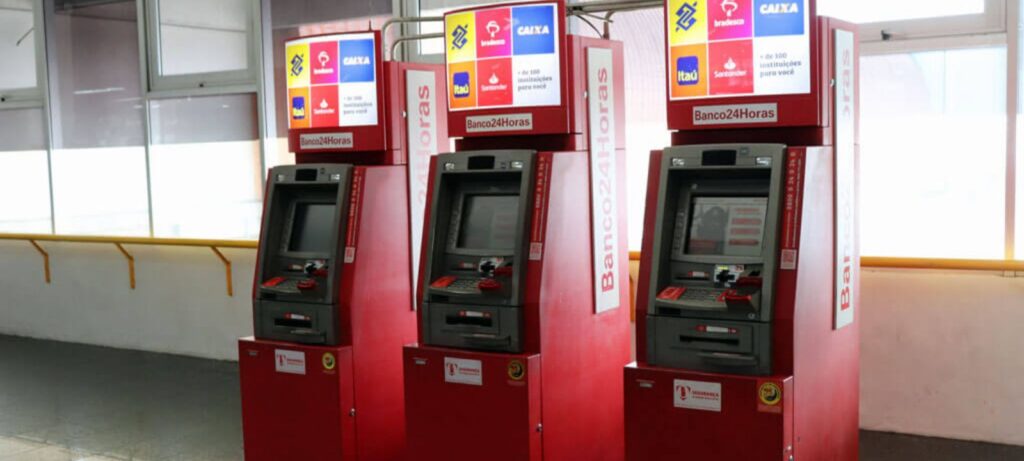
Branch ATMs inside Bradesco, Banco do Brasil, Itaú, and Santander in Copacabana, Ipanema, and Leblon generally add no local surcharge. That difference matters when you are withdrawing R$500–R$600 at a time.
5. Plan your first withdrawal before you land
Night withdrawals from street machines in unfamiliar neighborhoods are where tourists lose cards, get skimmed, or trigger fraud blocks because the transaction looks unusual to their home bank. Banks in Rio are open 10am–4pm on weekdays. Staff are available if a card gets retained. Machine errors get resolved faster when the branch is actually open.
Before your flight, open Google Maps, find a Bradesco or Banco do Brasil branch within walking distance of your hotel, confirm it still exists using street view, and plan your first stop there. The extra five minutes before you fly removes an entire category of arrival-day stress.
ATM Fees in Rio de Janeiro – Frequently Asked Questions
How much are ATM fees in Rio de Janeiro for tourists?
Most tourists pay between R$18 and R$30 per withdrawal in combined fees — that includes a flat foreign ATM charge from their home bank (typically $3–$5 USD) plus a 1–3% currency conversion markup. Banco 24 Horas street kiosks add their own operator fee of around R$18–R$24 on top of those costs. Using a travel card like Revolut or Wise eliminates the home bank charge entirely, leaving only the machine operator fee if the ATM adds one — and branch ATMs at Bradesco and Banco do Brasil generally do not.
Which ATM in Rio de Janeiro charges no fees for foreign cards?
Branch ATMs at Bradesco, Banco do Brasil, Itaú, and Santander in high-traffic areas like Copacabana, Ipanema, and Leblon generally add no local surcharge for foreign cards. Bradesco is the most consistently cited option among international travelers, with single withdrawal limits up to R$2,500. Banco 24 Horas kiosks are the machines most likely to charge an operator fee — around R$18–R$24 — and should be skipped whenever a branch ATM is available nearby.
Does Revolut work at ATMs in Rio de Janeiro?
Yes. Revolut works at most major bank ATMs in Rio. On the free Standard plan, UK and EU users get approximately £200/€200 per month with no Revolut fee, then a 2% charge on anything above that limit. The Revolut app has an ATM locator that flags surcharge-free machines near you. Revolut does not cover fees charged by the Brazilian ATM operator — if the machine shows a local fee before you confirm, cancel and try a branch ATM instead.
What is the best card to use at ATMs in Brazil?
For US travelers, Charles Schwab Investor Checking is the best option — it reimburses all ATM fees worldwide including Brazilian operator fees, with no foreign transaction fee and no monthly account fee. For European and UK travelers, Revolut Standard or Wise are the most practical choices, both offering free monthly withdrawal allowances at the mid-market exchange rate. Using a standard home bank debit card as your primary card in Brazil is the most expensive option and should be avoided.
What is dynamic currency conversion and why should I avoid it in Rio?
Dynamic currency conversion (DCC) is when a Brazilian ATM offers to convert your withdrawal into your home currency — dollars, euros, pounds — instead of reais. It always comes with a hidden exchange rate markup of 5–8% charged by the ATM operator, on top of whatever your bank charges. Always decline it. Select BRL and let your card provider handle the conversion at a real rate. On a R$500 withdrawal, accepting DCC can cost you R$25–R$40 extra for nothing.
How much cash do I need per day in Rio de Janeiro?
Most tourists in Copacabana and Ipanema get by on R$100–R$200 in cash per day for incidentals — beach vendors, tips, smaller kiosks, and the odd place that does not take card. Hotels, restaurants, Uber, and most shops in Zona Sul accept card payments. A smarter approach than daily ATM runs is withdrawing R$400–R$600 every two to three days from a branch ATM, keeping cash use limited to the situations where card genuinely is not accepted.
Is it safe to use ATMs in Rio de Janeiro?
ATMs inside bank branches, shopping malls, and airport terminals are generally safe. The higher-risk machines are street-facing standalone units — especially Banco 24 Horas kiosks in quieter areas, which have a worse record for skimming and distraction theft than branch machines. Use ATMs during daylight hours, shield your PIN, and put your cash away before stepping outside. If a machine has extra plastic around the card slot, a loose panel, or a camera not flush with the casing — walk away and find a different one.
What happens if an ATM swallows my card in Brazil?
If the branch is open, go inside immediately with your passport — staff can sometimes retrieve cards retained on-site. If it is closed, lock the card from your banking app straight away and call your bank’s international line. Do not attempt the same machine again. Resolution can take several days, which is why traveling with a second card — even just a backup credit card — removes this problem entirely. Brazilian banks are required to have a retained-card process, but it moves slowly.
Should I exchange currency before going to Rio or use ATMs there?
ATMs in Rio give a better exchange rate than currency desks in almost every scenario — especially airport and hotel exchange services, which consistently offer the worst rates in the city. Exchanging R$150–R$200 at home before you fly is reasonable for arrival-day costs like a taxi or airport snacks. For everything else, withdraw from a branch ATM in Rio using a travel-friendly card (Revolut, Wise, or Schwab) and you will beat any cambio rate you are offered.
Plan Your Cash Before You Need It
Rio rewards people who sort the basics before they land. Pick your hotel, identify the nearest Bradesco or Banco do Brasil branch, have your Revolut or Wise card ready, and decide how much cash you actually need instead of improvising at 1am on a street corner. If you are still mapping out your trip, browse verified profiles on Rioladies and plan your stay around a neighborhood that makes timing easy — the right location in Copacabana or Ipanema puts a decent branch ATM within five minutes of wherever you are.
For a smoother arrival overall, read how to get set up in Rio de Janeiro, sort your connectivity with how to buy a Brazil eSIM, and plan your transport with safe transportation for foreigners in Rio de Janeiro. Small details decide whether Rio feels smooth or messy. Sort them before you land.
Sources
- Banco Central do Brasil
- Revolut – ATM withdrawals in Brazil
- Wise – ATMs in Brazil: locations, fees, and tips
Follow us
- X (formerly Twitter): @RioLadies_
- Reddit: r/RioLadies_
- Bluesky: @rioladies.bsky.social
- Instagram: @luxuryescapesrj
- TikTok: @luxuryescapes_rj
Visit RioLadies.com to find your Luxury Escort in Rio de Janeiro. All profiles are verified, discreet and tourist-friendly.